We spend thousands of dollars optimizing our home Wi-Fi networks and selecting the perfect smart thermostats, yet we often treat the batteries powering our devices as an afterthought. We grab whatever is on the end-cap of the pharmacy aisle or the cheapest bulk pack at the big-box store. However, as someone who spends my days testing smart locks, motorized shades, and IoT sensors, I can tell you that not all AA batteries are created equal. In fact, choosing the wrong brand is more than just a minor inconvenience—it’s a recipe for device failure and wasted money.
While we obsess over the kilowatt-hours of our EVs or the milliamp-hours of our smartphones, the humble AA battery remains the silent engine of the modern household. But according to the latest rigorous testing from Consumer Reports, some of these "engines" are prone to stalling long before they should.
The Verdict: Brands to Avoid Based on Consumer Reports' comprehensive performance rankings, the three worst AA batteries for your money are Dynex (Best Buy), Eco Alkalines, and the CVS (Base Model) Alkaline. These brands consistently underperformed in high-drain scenarios like flashlights and motorized toys, often failing to justify even their lower price points.
Why Not All AA Batteries Are Created Equal
The "hidden cost" of cheap batteries isn't just the price of the replacement; it’s the frustration of a child’s toy dying mid-play or, more critically, a flashlight failing during a power outage. Consumer Reports tests batteries across two primary categories: high-drain (like a digital camera or a high-intensity flashlight) and low-drain (like a remote control or a clock).
A battery might perform passably in a remote that sips power over two years, but completely collapse when asked to move the gears of a motorized toy. For those of us in the smart home space, reliability is the only metric that truly matters. A battery that leaks or loses its charge prematurely in a smart door lock isn't just a "bad value"—it’s a security risk.
1. Dynex (Best Buy): The Worst Overall Performer
If you’ve spent any time in a Best Buy, you’ve likely seen Dynex products. Often positioned as the ultra-budget alternative to name brands, Dynex batteries have earned a dubious distinction in the Consumer Reports labs: they are the lowest-rated AA batteries overall.

In testing, Dynex batteries posted the lowest scores for both flashlight (high-drain) and toy (intermittent-drain) use. While Best Buy has largely moved toward their "Insignia" brand for house-labeled electronics and accessories, Dynex stock can still be found in some clearance bins or through third-party resellers.
The lesson here is simple: steer clear of "second-hand" or aging stock of this brand. When compared to Insignia—which performs significantly better for roughly the same price—there is simply no reason to let a Dynex battery near your devices. Their lack of endurance makes them a poor choice even for low-stakes electronics, as the risk of leakage increases as the battery’s internal chemistry degrades under the stress of even moderate loads.
2. Eco Alkalines: Great Name, Poor Endurance
In an era where we are all trying to reduce our carbon footprint, the name "Eco Alkalines" sounds like a win-win. Unfortunately, the performance tells a different story. While the name suggests sustainability, the actual household reliability leaves much to be desired.
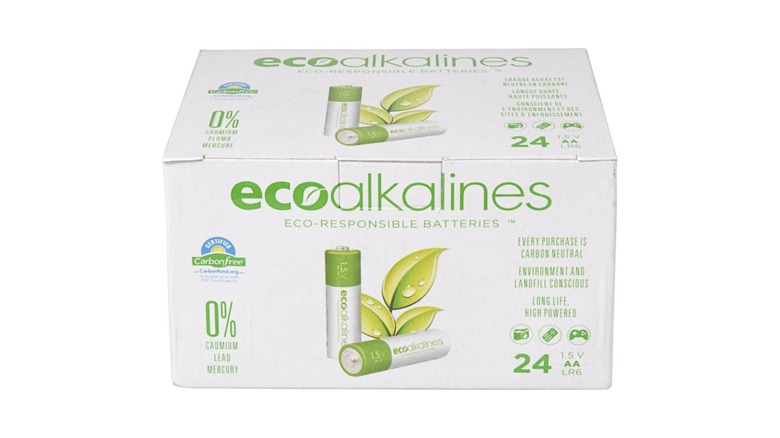
Consumer Reports does not recommend Eco Alkalines for families specifically because they have a significantly shorter lifespan in high-drain devices. In tests involving motorized toys—which require bursts of high energy to move gears and wheels—Eco Alkalines faltered far sooner than their traditional alkaline counterparts.
There is also the matter of availability and corporate stability. LEI Electronics, the parent company behind Eco Alkalines, has faced various controversies and distribution hurdles over the years. This means the batteries you find on a shelf might have been sitting there for a significant portion of their shelf life already. For a smart home enthusiast, using a battery with a questionable discharge rate and shorter-than-average lifespan is a recipe for constant maintenance. If you want to be "eco-friendly," your best bet is to invest in high-quality rechargeables rather than buying underperforming single-use "eco" brands.
3. CVS (Base Model): The Costly Underperformer
The "CVS problem" is one of the most frustrating for consumers because it involves a classic bait-and-switch regarding value. CVS offers two main tiers of batteries: their "Base" alkaline and their "MAX" line.
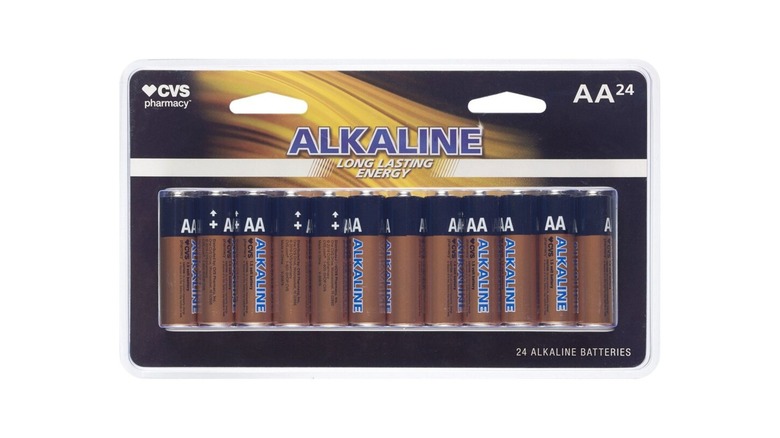
The CVS base alkaline batteries cost approximately $20 per 24-pack. This price point puts them neck-and-neck with premium competitors like Duracell or Energizer. However, the reliability ratings are nowhere near the same level. According to Consumer Reports, the gap between this base model and the premium version (CVS MAX) is wider than with almost any other brand.
While the CVS base model shows decent performance in low-drain "toy" tests, it fails miserably in flashlight longevity tests. It is the definition of a "bad buy"—you are paying a premium name-brand price for a product that performs like a generic dollar-store alternative. If you find yourself at CVS and need batteries, it is worth the extra few cents to upgrade to the MAX line, or better yet, go across the street to a warehouse club.
Performance Comparison: The 3 Worst vs. The Standard
To understand just how poorly these batteries perform, we have to look at the metrics. Consumer Reports uses a "Flashlight Test" to simulate high-drain, continuous use and a "Toy Test" for intermittent, high-drain use.
| Battery Brand | Approx. Price (24-pack) | Flashlight Performance | Toy Performance | Verdict |
|---|---|---|---|---|
| Dynex | $10 - $12 (Clearance) | Poor | Poor | Avoid at all costs |
| Eco Alkalines | $15 - $18 | Fair | Poor | Greenwashing; skip it |
| CVS (Base) | $20.00 | Poor | Fair | Terrible ROI |
| Kirkland (Costco) | $14.00 | Excellent | Very Good | The Value Champion |
The "Eneloop" Statistical Insight
It’s also important to manage expectations when moving away from alkalines. Interestingly, testing showed that the standard NiMH Eneloop batteries—often cited as the gold standard for rechargeables—provided only 1 hour and 15 minutes of runtime in specific flashlight tests. While this was the shortest result among leading rechargeable brands in that specific high-intensity test, it still highlights that for certain high-drain emergency tools, a premium single-use Lithium battery or a high-capacity NiMH (like Eneloop Pro) is necessary.
How the Testing Was Conducted: Flashlights vs. Toys
Consumer Reports doesn't just put batteries in a remote and wait for it to die. They use specialized equipment to measure "Real-World Runtimes."
- High-Drain (Flashlights): This test draws a constant, heavy current. Batteries that have high internal resistance heat up and lose capacity quickly. This is where CVS Base and Dynex failed most significantly.
- Intermittent High-Drain (Toys): This simulates a toy being turned on and off. Some batteries "recover" better than others during the "off" periods. Eco Alkalines struggle here, meaning the toy will seem sluggish or stop working entirely while there is still technically "juice" left in the cell.
Price isn't given much consideration in the primary CR rankings, since cost tends to matter less than reliability for most buyers. However, when you factor in that CVS charges name-brand prices for sub-par cells, the "value" score plummets.
Better Alternatives: What to Buy Instead
If you’re looking for the best performance for your smart home devices or high-drain electronics, skip the pharmacy house brands and the "eco" gimmicks.
- For Bulk Value: Kirkland Signature (Costco). They consistently rank near the top of the charts, often performing as well as Duracell CopperTop for a fraction of the price.
- For High-Drain/Cold Weather: Energizer Ultimate Lithium. If you have a smart lock on an exterior door or a trail camera, lithium is the only way to go. They don't leak and they handle extreme temperatures with ease.
- For Daily Smart Home Use: Panasonic Eneloop Pro. While the standard Eneloops are great for remotes, the "Pro" version provides the extra capacity needed for motorized blinds and high-traffic smart locks.
View Full Consumer Reports Rankings →
FAQ
Q: Are expensive batteries always better? A: Not necessarily. As the CVS Base model shows, price is often more about the retail location and marketing than the actual chemistry inside the cell. However, ultra-cheap "Heavy Duty" (non-alkaline) batteries should always be avoided for modern electronics.
Q: Why do my batteries keep leaking in my devices? A: Leakage usually occurs when a battery is left in a device for too long after it has been depleted. Lower-quality brands like Dynex often have thinner casings or less stable chemistry, making them more prone to outgassing and leaking.
Q: Should I use rechargeable batteries in my smart lock? A: Check your manufacturer's manual. Some smart locks (like those from August or Yale) prefer the consistent voltage of an alkaline or lithium battery. NiMH rechargeables have a lower nominal voltage (1.2V vs 1.5V), which can sometimes trigger "low battery" warnings prematurely.
Final Thoughts
In the ecosystem of a smart home, the AA battery is the lowest common denominator. We rely on them for everything from our Zigbee motion sensors to our emergency flashlights. Saving five dollars on a pack of Dynex or CVS Base batteries is a classic example of being "penny wise and pound foolish."
When the power goes out or your smart lock needs that extra kick of torque to engage the deadbolt, you'll want a battery that was built for performance, not just a low price point. Stick to the proven winners and keep your "buyer beware" radar tuned high when browsing the battery aisle.